Friday, August 27, 2010

Dying to Self

Wild worlds live in the dawn of consciousness as I move from sleep to wakefulness.  Some of the worlds are insightful and profound others are simply wacky!  This morning though I came across something that I think is quite true. 

Dream of flowers and sacrifice.

The flower has the ability to give pleasure to us.  It is a collection of color explosions that can transmit to emotion like no other things we set our eyes on.  We give them at particularly emotional moments of our lives (good and bad).  They celebrate life.  They celebrate death.  Yet in all of this how do they accomplish this feat?  Sacrifice.  All flowers die in their season.  But the ones that share a special purpose with our lives must die an early death.  They must sacrifice themselves to bring pleasure to us.  It is self-sacrifice that leads to greater good.  I realize that flowers do not have a choice in the matter.  But we do.  What are you willing to sacrifice for the greater good?  Can you fulfill your special purpose by dying to self?

Therefore, brothers, by the mercies of God, I urge you to present your bodies as a living sacrifice, holy and pleasing to God; this is your spiritual worship.
Romans 12:1 (HCSB)

Have a Blessed Day

Thursday, August 26, 2010

The Soul and Anger

It seems that most of the time the soul is often killed by anger.  Hurtful words, regret, fear, hatred, resentment, prejudice, loss of hope, rage and so on are all soul killers if we do not keep them in check.  In some ways anger is rooted in all of these.  It is no wonder that we grow up being taught to be guilty for our anger.  Look at all the damage it causes. 

This leads to a further frustration of feeling invalidated by someone saying "Don't be angry" or "You should not be angry" when in fact I am angry.  I can no more turn off my anger than to stop thinking about hunger when I have not eaten for most of the day.  Stuffing anger is not helpful because it will always come out in other ways (passive aggression, rage episodes, or depression).  So it would seem that you are stuck with no good options when it comes to anger.  I can think of that moment stuck between stuffing it or letting it all out and that hopeless feeling that no matter what I do it is not going to be good.  That is a soul killer!

Which leads me to the conclusion that:

...man’s anger does not accomplish God’s righteousness.
James 1:20 (HCSB)

Yet we have this:

Be angry and do not sin. Don’t let the sun go down on your anger, and don’t give the Devil an opportunity.
Ephesians 4:26-27 (HCSB)

I have read this passage and wondered, "OK, but how do I do that?"  Yet there is two immediate practical applications in this verse if we open ourselves to hear what God is saying

  • Do not allow anger to fester "Don't let the sun go down" tells me that the time to deal with anger is in the here and now.  Not tomorrow, not next week, but right now.  However, it does not say go on the attack.  It just says deal with it now!!!!
  • The motivation is a spiritual one.  Our anger can give the devil a foothold in our lives.  Unresolved anger is giving opportunity for spiritual downfall.

This passage is closely connected to this:

Know that the Lord has set apart the faithful for Himself; the Lord will hear when I call to Him. Be angry and do not sin; on your bed, reflect in your heart and be still. Selah Offer sacrifices in righteousness and trust in the Lord.
Psalms 4:3-5 (HCSB)

Continuing our list then:

  • Know that your relationship with God sets you apart.  There is a peace that comes from knowing God.  In that moment know God and choose faithfulness.
  • Call on the Lord.  Prayer in a moment of anger can release you from the bondage of misplaced passion
  • Meditate (reflect) sort out, understand, your anger. 
  • Be still!  There is a close connection between being still and knowing God (Ps 46:10)
  • Selah which is most likely a musical term for pausing.  But in that moment of anger pause can be the most powerful thing you can do.
  • Often doing what is right is a sacrifice.  Anger demands it's own.  Anger demands it's rights.  Anger demands others agree.  I am sure that you can think of other things that anger demands.  Righteousness often requires sacrifice and surrender.  These actions are in opposition to our anger most of the time.  At that moment think what is the righteous thing to do.  If it involves sacrifice or surrender then it is likely that you have stumbled upon the very thing that needs to be done in that moment. 
  • Finally but certainly not least "trust in the Lord"  We repeat that phrase so often it is a clichĂ© to us.  If "Trust in the Lord" has become a mindless phrase then take some time to examine why.  Trust in the Lord is a powerful spiritual truth that can find its way into the depth of your soul and move you from destruction to life. 

I have often said "Anger in and of itself is not good nor bad.  It is what you do with it that makes it good or bad."  I hope that some of these suggestions are helpful to you in your effort to "be angry and do not sin."

I call heaven and earth as witnesses against you today that I have set before you life and death, blessing and curse. Choose life so that you and your descendants may live, love the Lord your God, obey Him, and remain faithful to Him. For He is your life, and He will prolong your life in the land the Lord swore to give to your fathers Abraham, Isaac, and Jacob.”
Deuteronomy 30:19-20 (HCSB)

Have a Blessed Day

Wednesday, August 25, 2010

The Biology of Anger

When a person becomes angry there are two tell tale signs that you can see.  First is shallow heavy breathing, and the second is increased blood flow (seen as flushed face or felt as being hot).  The Bible makes several references to these types of anger.  The anger that is represented by breathing hard can be the result of a serious offence against you or someone you love or it can be as simple as a wish or desire unfulfilled.  We can all fall into this.  Most often others that see it will say "Are you angry?"  More often than not we play it off and say "No."  The fact is whether it is a serious situation or a trivial selfish whim the anger needs to be dealt with or it will develop into something worse. 

I have personally experienced the pains of my own anger unchecked as well as been the victim of others anger unchecked.  My guess is that we all have had this experience.  The question is why with all of our regret and discontent for the state of affairs do we fall into the trap of anger again and again.  I believe that anger is a complex emotion that has biological, psychological, and spiritual implications.  I would like to delve into the biological aspect first. 

Four words that come from the Bible that point to the biological implications of anger are in Hebrew af and awnaf (meaning rapid breathing), chemah (implying heat), and in Greek thymos (implying breathing hard).  Feeling hot and breathing hard (or rapid) are biological functions that serve a purpose.  These are similar to fight or flight.

Fight or flight (activation of the sympathetic nervous system) is a well documented and well researched phenomena within the field of neurology and psychology.   The biological systems affected by fight or flight are:

  • Respiratory (increased breathing rate and dilation of the bronchial tubes)
  • Cardiac (increased heart rate and dilation of blood vessels to the muscles, and constriction of blood vesicles to other parts of the body
  • Inhibition of digestion (that is digestion slows down or stops)
  • Paling or flushing (blood drained out or red faced)
  • dilation of pupils of the eyes
  • Auditory exclusion (loss of hearing)
  • Loss of peripheral vision (tunnel vision)
  • tremors
  • increased perspiration

These are all automatic responses that cannot be directly controlled by the person that is experiencing them.  What is more once this response kicks in it tends to build until the threat or perceived threat is removed.  Even after the threat is removed the effects of fight or flight slowly return to a normal state. 

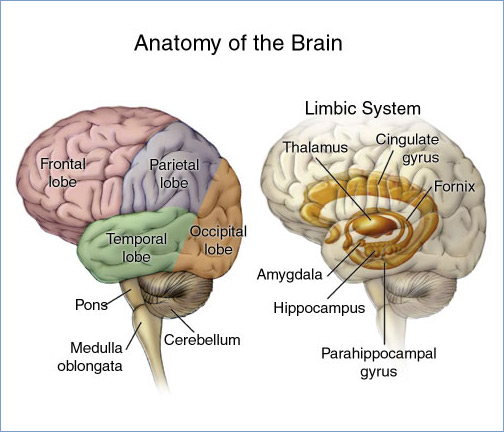
The brain it the control center of biological functioning.  In the brain two parts are implicated in anger response: the lymbic system and the prefrontal cortex.  The lymbic system buried deep the brain is responsible for the automatic fight or flight response (Hypothalamus just below the thalamus) and the experience of emotion (Amygdala).  The Prefrontal Cortex (part of the frontal lobe) is responsible for planning, organizing, and reasoning.  Your brain is literally sending a mixed message.  One part is saying "hit this guy or run away." While the other part of your brain is saying "Maybe we could just talk to him."  When you blend those two together what comes out is a blend of the two.  Maybe you don't hit the guy, but you attack him verbally.  This is of course a gross oversimplification of brain functioning, but I hope that it illustrates the brain function of anger.  

What happens when the prefrontal cortex (the reasonable part of the brain) is not working properly or is diminished?  If the fight or flight response is unchecked then intense fear and/or intense rage occurs.  The resulting behavior becomes intensely violent/aggressive or extremely protective without much thought to the implications or consequences of this behavior.  This is why you will have a moment of anger then later you regret when the frontal cortex comes back online so to speak.  After the moment of anger is past you are now thinking with the front part of your brain realize the implications of what just happened where as when you were angry these thoughts we shut down or quieted. 

Biology of anger has implications in what we do with anger.  First there has to be a way to quiet down the fight or flight response.  The best way to do this is to relax.  Relaxation activates the parasympathetic nervous system which acts in opposition to the sympathetic nervous system (fight or flight).  That is why it is not possible to be engaged and relaxed at the same time.  They are two incompatible biological states.  There are many ways to relax, counting exercises, progressive muscle relaxation, deep breathing, use of imagery, and meditation are some ways I have used to help people learn the skill of relaxation (see here for more information).  By practicing relaxation you lower you set level so that when the fight or flight kicks in you do not have as high a peak.  Also by learning relaxation you can also more quickly arrest and recover from fight or flight.  This takes much practice. 

Another thing you can do has to do with the thinking planning part of your brain.  The goal is to bring the prefrontal cortex on line early on so that you are responding rather than reacting to anger.  There are a couple of tricks to do this.  One is to recognize the difference between a real and perceived threat.  Anger is a response to a threatening situation.  When it really comes down to it there are very few situations in our day to day life that are real legitimate threats to our wellbeing.  To me a legitimate threat is being assaulted by someone or threatened of life and limb.  For example a guy with a gun pointed at you.  On the other hand being angry with a pool cover is not a legitimate threat to my well being.  If you reason that a threat is not legitimate then you need to relax, distract, or disengage.  Often though just recognizing that there is no legitimate threat is enough to being the process of cooling off.  A second trick to get the front part of your brain to activate is a series of questions based on the acronym "I AM Worth it" developed by Redford Williams MD.

  • Important:  Is this important to me?
  • Appropriate: Is it appropriate for me to be angry in this situation?
  • Modifiable: Is there something I can do about it?
  • Worth It: Is it worth it to do something in this situation?

If you answer all the questions yes then two things have happened.  One you have identified a legitimate problem to be solved.  Two you are now thinking and reasoning rather and angrily reacting.  On the other hand if you answer "no" to any of them then you are in a situation you have to cope with and again you are thinking over reacting.  By bringing your front part of your brain online you will being the process of quieting the biological anger response. 

What other ways can you think of to cool off or relax the biological response to anger?

God Bless You All


Notes
1. Duke Medicine Health Line "Why Anger Kills" Published: Nov. 26, 2007 Updated: May 24, 2010 Retrieved August 24, 2010.  

Tuesday, August 24, 2010

Burning anger

You may have heard the story about a forest service worker that started the worst forest fire in Colorado state history.  Her Name was Terry Lynn Barton.  She had received a letter from her estranged husband regarding their divorce.  She was very upset at the contents of the letter and decided (according to her own admission) that she was going to burn it.  She started the fire in an area that was under a fire ban due to drought conditions.  Ironically it was her job to enforce the ban.  The fire ended up spreading to burn 138,114 acres and destroying 133 homes.  There is some question as to her story's truthfulness as the prosecutors believe that Ms Barton set the fires deliberately. 

Whether accidentally or deliberately I believe this is a good analogy for how anger works if it is unchecked.  It was a small burning anger that she held in her hands.  It certainly did not seem small to her at the time I am sure, but relative to the grand scheme of things it was in fact small.   That small burning in her life led to a huge burden to the community around her as over 5000 people were displaced and hundreds of firefighters fought a blaze that would end up costing over 38 million dollars in damage.  That is the nature of fire.  It also is the nature of anger. 

Are you angry?  Do something about it before it causes more damage to those around you than you can imagine.  Unresolved, unchecked anger is as destructive as a fire which is why the Bible so frequently uses fire to describe anger. 

Friday, August 13, 2010

Do Not Judge?

This is a follow up to my previous sermon, "The Time is Now."

Audio: Do Not Judge

Text:

"I did one work, and you are all amazed," Jesus answered. "Consider this: Moses has given you circumcision-not that it comes from Moses but from the fathers-and you circumcise a man on the Sabbath. If a man receives circumcision on the Sabbath so that the law of Moses won't be broken, are you angry at Me because I made a man entirely well on the Sabbath? Stop judging according to outward appearances; rather judge according to righteous judgment."
John 7:21-24 (HCSB)

Stop judging according to outward appearances rather judge according to Righteous judgment. After my last sermon I had some come to me to question the notion that teaching that God's word says that we are not to judge generally was evil. Today I would like to cover three areas. First I would like to clarify the idea that suggesting that God does not want us to judge is evil. Second I would like to pull from the Scriptures what unrighteous judgment looks like. Finally I would like to explore with you was righteous judgment looks like.

Teaching "Do not judge" is plainly evil in my estimation. First let me explain what I mean by evil. Something that is evil can be worthless in and of itself, a perversion of the original, degenerate, and/or destructive. Something that is evil can also be morally wrong, with intent to hurt others, violent, Atrociously wicked, and or/lewd. I think one could make the case for the latter list, but in this instance I am using evil in the sense of the first list. The teaching is worthless in and of itself, the teaching is a perversion from the original, the teaching is degenerate, and the teaching is destructive.

Do not judge is a worthless teaching because it self-contradictory. A person saying, "Do not Judge" is in fact judging. They contradict themselves if they mean by "do not judge" to be a moral imperative. Any teaching which contradicts itself is meaningless and worthless. It is like trying to drink water from a glass that has no bottom. I keep pouring water into the glass but when I raise it to my mouth there is nothing inside for me to drink.

Do not judge as a moral imperative is a perversion of the original. In my last sermon I explained that Jesus was not in fact teaching the moral imperative to not judge, but rather dealing with the issue of hypocrisy. I will cover hypocrisy more later in the sermon. The phrase "Do not Judge" occurs a handful of times in the Bible. Yet the command to judge accounts for more than 50 references in the Bible (based on a quick count) including more than 20 in the New Testament. If Do not judge is a moral imperative then why would God include the command to judge. Why would God appoint Judges in Israel's history, why would there be an entire book of the Bible dedicated to this period talking about those that judged righteously and those the judged unrighteous. The answer is that in the cases that the phrase "do not judge" appears, the command is conditional and not absolute. That is to say do not judge hypocritically, do not judge unbelievers, do not judge with condemnation, do not judge with unforgiveness, do not judge according to flesh, and so on. The imperative to not judge has more to do with the heart and motive of the person doing the judgment than for the act itself. To suggest otherwise is really a perversion from the original Word of God.

Do not judge as a moral imperative is a degenerate teaching of judging righteously. It focuses exclusively on the things to avoid in judging righteously and completely throws out the rest of the teachings. It has a form or godliness, but denies the moral imperatives of God to act righteously toward others. For example how can one defend the orphans and widows unless one has perceived and judged that there is one that is doing them harm? "Do not judge" is an abandonment of of our moral responsibilities to the world around us. "I cannot help, because I judge no one" is morally reprehensible to me.

Do not judge as a moral imperative is destructive. When church which is the body of individuals coming together under the headship and authority of Christ lose their ability to stand strong in times of moral chaos both the world and the body of Christ suffers. I think of:

"You are the salt of the earth. But if the salt should lose its taste, how can it be made salty? It's no longer good for anything but to be thrown out and trampled on by men.
Matthew 5:13 (HCSB)

We are salt 1) To arrest the decay of an immoral society, and 2) That we can bring goodness and light to a lost world. "Do not judge" is about as bland as one can get. It only requires one thing, to do nothing. There is no saltiness in such a teaching and so it is no longer good but to be trampled on by men. Perhaps that is why there is no reverence from society regarding the things of God; We have lost our saltiness. With the moral calling removed then decay and hopelessness set in without the possibility of redemption. "Do not judge" conceals sin by saying nothing about it.

The one who conceals his sins will not prosper, but whoever confesses and renounces them will find mercy.
Proverbs 28:13 (HCSB)

I wonder how one would possibly come to a knowledge of sin without another first proclaiming what sin was. Yet the "do not judge" teaching prohibits such proclamations. They are after all passing judgment about the morality of others' behaviors.

Let me be clear, a gentle kind person with great sincerity could possibly bring forth the teaching of "do not judge." They could be very pious in every way. They could possibly even be a gentle and loving soul toward others. However, if they hold to the teaching "do not judge" they will destroy themselves and those that listen to them. In the end my assessment of such a scenario is that the teaching is evil.

With that being said, I do not believe nor does the Bible teach that all judgment is good. In fact the Bible has much to say about unrighteous judgment and we would be wise to learn what God's word says about this type of judgment. Let's take a look at that next.

Do you really speak righteously, you mighty ones? Do you judge people fairly? No, you practice injustice in your hearts; with your hands you weigh out violence in the land. The wicked go astray from the womb; liars err from birth.
Psalms 58:1-3 (HCSB)

"Do you really speak righteously?" That is among of the most important questions you can ask in this life. Our words really do matter and how we use our words reveals our heart:

A good man produces good out of the good storeroom of his heart. An evil man produces evil out of the evil storeroom, for his mouth speaks from the overflow of the heart.
Luke 6:45 (HCSB)

When we judge it has to be in a righteous manner. It must be in accordance to God's righteousness and not with our thoughts of what is right. God is the standard and we set ourselves to play God in others' lives when we ignore this fact.

The first way that we can fall into unrighteous judgment I have already covered, but it bears repeating. God hates hypocrisy.

Smooth lips with an evil heart are like glaze on an earthen vessel. A hateful person disguises himself with his speech and harbors deceit within. When he speaks graciously, don't believe him, for there are seven abominations in his heart. Though his hatred is concealed by deception, his evil will be revealed in the assembly.
Proverbs 26:23-26 (HCSB)

Do not drag me away with the wicked, with the evildoers, who speak in friendly ways with their neighbors while malice is in their hearts. Repay them according to what they have done- according to the evil of their deeds. Repay them according to the work of their hands; give them back what they deserve. Because they do not consider what the Lord has done or the work of His hands, He will tear them down and not rebuild them.
Psalms 28:3-5 (HCSB)

Jesus reserved his harshest words for those that dealt with others hypocritically.

Woe to you, scribes and Pharisees, hypocrites! You are like whitewashed tombs, which appear beautiful on the outside, but inside are full of dead men's bones and every impurity. In the same way, on the outside you seem righteous to people, but inside you are full of hypocrisy and lawlessness.
Matthew 23:27-28 (HCSB)

And later in the passage he says:

Snakes! Brood of vipers! How can you escape being condemned to hell?
Matthew 23:33 (HCSB)

When we judge hypocritically we become the object of God's displeasure. Paul in speaking to the Romans and to us says:

Therefore, any one of you who judges is without excuse. For when you judge another, you condemn yourself, since you, the judge, do the same things. We know that God's judgment on those who do such things is based on the truth. Do you really think-anyone of you who judges those who do such things yet do the same-that you will escape God's judgment?
Romans 2:1-3 (HCSB)

Some might say then it is better not to judge then to fall under the severity of God's judgment. I say no. It a lukewarm response from a lukewarm Christian that says, "I do not judge, because to judge is hypocritical." and then does nothing. The first part to avoid hypocrisy is true enough, but the second part to do nothing is completely against God. Sometimes we see the sins in others, but what we really see when it is spiritually discerned is the sins in ourselves. Our response to sin in our own lives ought to be repentance. We need to deal with sin in our lives that we would be effective in ministry for God. Without repentance we are disqualifying ourselves from the Lord's work. I do not suspect that God will say, "well done, you really did nothing to Glorify Me, but at least you avoided hypocrisy."

The second class of unrighteous judgments is with partiality. The most common way to show partiality is with money. In it's most gross form unrighteous judgment occurs when a person takes a bribe to pervert justice. However, it can also occur when we give personal preference based on social class or some other outward measure of a person. We can be guilty of judging with harsher judgment those that are unlike us without really examining the facts and discerning righteously. God shows no partiality and desires that we do the same. When partiality comes into play it distorts our judgment and perverts justice.

A third class of unrighteous judgment is according to outward appearances. Jesus said:

Stop judging according to outward appearances; rather judge according to righteous judgment.
John 7:24 (HCSB)

He was responding to the Pharisees for criticizing Jesus for "working" on the Sabbath. His work was healing a person. We can become so consumed in our judgment that we allow our judgment to blind us to the good that is going on. In this case Jesus is saying is it more imperative that we follow the letter of the Law or that we follow the spirit of the Law in order that we might do good. This is not an excusing of sin, but at times we have many things at play and judging for the higher good sometimes means that we need to look beyond the appearance of things.

The forth class of judgment would be judging according to the flesh. Jesus said:

Ye according to the flesh do judge; I do not judge any one, and even if I do judge my judgment is true, because I am not alone, but I and the Father who sent me;
John 8:15-16 (YLT)

When we judge according to our own flesh or according to human standards and leave God out then we judge unrighteously. This type of judgment is looking at a situation or person through the lens of human judgment. We can fall into this trap when we allow our personal preferences, or our personal ideas of the right or wrong way to do things to become the standard for our judgment. Yet Paul clearly explains:

For I know that nothing good lives in me, that is, in my flesh. For the desire to do what is good is with me, but there is no ability to do it.
Romans 7:18 (HCSB)

and

For the mind-set of the flesh is hostile to God because it does not submit itself to God's law, for it is unable to do so. Those who are in the flesh cannot please God.
Romans 8:7-8 (HCSB)

When we judge according to the flesh it is my understanding, in light of Romans 7 and 8 that we cannot please God and are hostile to God. We must keep our flesh in check if we are to judge righteously.

A fifth type of unrighteous judgment is judging according to ascetic practices, foolish debates, or according to doubtful things. Paul says:

Receive one who is weak in the faith, but not to disputes over doubtful things.
Romans 14:1 (NKJV)

Oh how often we are led into great disturbances over doubtful things. Sad really it seems that as I survey the landscape of Christianity including my own life I find that we pay far more attention to doubtful things than to the things of God. When we judge a brother on doubtful things then we judge unrighteously. We also become a stumbling block to our brother or sister in Christ. Our judgment becomes their downfall. This type of judgment is unrighteous then on two counts, first that we are placing importance on doubtful things and two that we cause our brother or sister to stumble. In Romans 14 Paul lists food, drink, and day that is observed to the Lord as doubtful things. To this we can add to the list: particular religious observances, ascetic practices, severe treatment of the body, foolish debates, arguing over words, genealogies, jealous quarrels. These are promoted by a false sense of humility and righteousness, but have no power in and of themselves to curb our sinful nature according to Paul's letter to the Colossians 2.

I wonder though if there could possibly be other doubtful things that we pass judgment on and become a stumbling block to others. I actually have many things that come to mind as I reflect on this. I do not want to share them keeping with Paul's admonishment to not enter into disputes over these things I believe it is better in this case to keep my opinion to myself. One way I believe that we can determine if a thing is doubtful is whether or not the Bible specifically addresses a topic or there is a principle that is taught in the Bible that can be brought to bear on that situation. The specific topics and principles of the Bible cannot be doubtful and must be upheld. All other things are doubtful and it probably best that we do not dispute over these things. Not that we cannot appreciate or even enjoy doubtful things, but to argue with a brother or sister over it is destructive.

The final class of unrighteous judgment that I would like to cover is speaking evil of others. This evil speaking is a type of judgment that is condemning and against the other person. This type of judgment has very little if any grace and it not really with the intent of restoring a brother or sister. It is raw running a person down condemnation. This is evil speaking. It is often slanderous and derogatory. Speaking evil can also be about someone and not to someone. However, speaking evil of someone behind their back is not any better than speaking evil to their face. In one way it is worse, because you add the sin of gossip to the sin of unrighteous judgment.

So what then? With all these types of unrighteous judgment it would seem that it is better not to judge. However doing nothing in the face of great evil does not seem to be an admirable quality. So how is it that we can judge righteously? Righteous judgment is accomplished by upholding God's Righteousness, in fairness, with wisdom, with forgiveness, redemption, and reconciliation as motives, and moved by the Holy Spirit.

The action of our judgment will change based on who we are dealing with as well. Whether we are witnessing to unbelievers, dealing with hostile unbelievers, confronting false teachers, addressing self-proclaimed believers that continue in gross immorality, or a brother or sister that has recently fallen into sin. To address all the nuances that each of these situations would bring up would take quite a bit of time and possibly several sermons, but for the sake of time let me just briefly go over what generally constitutes Righteous Judgment.

We must first and foremost hold up God's righteousness. Injustice under God's law is a threat to justice everywhere. We have to recognize that God's justice is higher than our justice, God's law is higher than our law, God's righteousness is higher than our righteousness. In the end God is higher than any feeble attempt on our part to accomplish anything of worth. That is why we need to judge righteously according to the righteousness of God. The standard for this righteousness is the very word of God. Before we start casting stones though we must understand the complete record of God both New and Old Testaments and how God is calling his church to manifest His righteousness which is quite different than the way that He appointed Israel to manifest His righteousness. This will require regular study of the Bible.

We must examining our own self first. If we judge without a serious self-examination then we will become like the hypocrites that God despises. But if we have an attitude of,

Brothers, if someone is caught in any wrongdoing, you who are spiritual should restore such a person with a gentle spirit, watching out for yourselves so you also won't be tempted.
Galatians 6:1 (HCSB)

Then we will judge righteously.

We must be fair and impartial. The moment we become partial and do not defend the defenseless and make our judgment conform to our personal preferences we pervert justice and our judgment is not true.

We must be wise. The beginning of wisdom is the respect and honor and fear of the Lord. Judgment is not to be rushed into as fools are known to do. But rather is to be graciously weighed out and contemplated. Not that we stand in indecision. We have whole body's of believers and denominations that in the effort to weigh things out put off making a judgment on issues that are plainly addressed in God's word as if were not clear. Indecision is not wise.

In judgment forgiveness, redemption, reconciliation, and health of the Body of Christ (Church) must be central to our motivation. These can be summed up in that we are to love others. At times love requires judgment. In fact not judging can be one of the most unloving acts one can do. Simply stated if I am unwilling to let you know you are about to fall into a pit for fear of do not judge and let you fall into it then I have not loved you. Love in this case requires sound judgment. On the other hand if condemnation is our way then we put ourselves in God's role of judge, become self-righteous, and God's grace is not in us. We should always speak in a since desire to see reconciliation. Even when we have to move to discipline.

And if anyone does not obey our instruction in this letter, take note of that person; don't associate with him, so that he may be ashamed. Yet don't treat him as an enemy, but warn him as a brother.
2 Thessalonians 3:14-15 (HCSB)

Finally, but certainly not least our judgment must be moved by the Holy Spirit.

Now God has revealed these things to us by the Spirit, for the Spirit searches everything, even the depths of God. For who among men knows the thoughts of a man except the spirit of the man that is in him? In the same way, no one knows the thoughts of God except the Spirit of God. Now we have not received the spirit of the world, but the Spirit who comes from God, so that we may understand what has been freely given to us by God. We also speak these things, not in words taught by human wisdom, but in those taught by the Spirit, explaining spiritual things to spiritual people. But the unbeliever does not welcome what comes from God's Spirit, because it is foolishness to him; he is not able to understand it since it is evaluated spiritually. The spiritual person, however, can evaluate everything, yet he himself cannot be evaluated by anyone. For who has known the Lord's mind, that he may instruct Him? But we have the mind of Christ.
1 Corinthians 2:10-16 (HCSB)

In the end to judge moved by the Holy Spirit is to have the mind of Christ.

There is much more that I desire to share with you, but I fear that if I continue you would not hear what I have to say. This has been a longer sermon so let me just sum up a few points before we move to a time of invitation and commitment.

First "Do not judge" as a moral imperative is evil because it is self-contradictory, perverts the original meaning in God's word, it abandons our moral responsibility to the world, and becomes destructive to the world around us as well as the church.

Second, we judge unrighteously when we judge with hypocrisy, with partiality, according to appearances, according to the flesh, in deputes over doubtful things, or to speak evil to or about others.

Finally if we want to judge righteously then we must judge, according to God's righteousness, examining our own self first, with fairness and impartiality, with wisdom, motivated by redemption and love, and moved by the Holy spirit.

Dear friends we live in a time that the world will label us intolerant and judgmental. To escape this label our natural tendency will be to either not judge or to judge unrighteous. We must on the other hand chose to stay the narrow course of Righteousness.

Let me close with this

I solemnly charge you before God and Christ Jesus, who is going to judge the living and the dead, and because of His appearing and His kingdom: Proclaim the message; persist in it whether convenient or not; rebuke, correct, and encourage with great patience and teaching. For the time will come when they will not tolerate sound doctrine, but according to their own desires, will multiply teachers for themselves because they have an itch to hear something new. They will turn away from hearing the truth and will turn aside to myths. But as for you, be serious about everything, endure hardship, do the work of an evangelist, fulfill your ministry.
2 Timothy 4:1-5 (HCSB)

And now let Paul's Charge to Timothy become our charge that we might fulfill the ministry that God has set out before us. Now is not the time to shy away. Let's pray!

Friday, July 30, 2010

How Fast Do You Think You Were Going Back There?

This post has two illustrations about anger personal and application.

I may have shared this story before.  So if it sounds familiar forgive me.  There was one morning several years ago that I had a bad time getting ready.  I was angry with my wife and the kids.  I got the kids to school and was driving to work.  As I was thinking about the morning and busy blaming my wife and kids for the wonderful mood I was in I saw blue lights flashing in the rearview mirror.  I pulled over and the officer asked the question, "How fast do you think you were going back there?"  He said I was going 65 in a 55.  I thought for a moment "if only my family had not made my morning so bad I would not have got a ticket."  Later as a cooler mental state prevailed I recognized the thinking error of blaming my family for something that could not possibly be their fault no matter how difficult the morning was.  I also recognized the power of anger to make us speed through life in a destructive manner.  Latter when I shared with my wife she (to my shame) was very gracious, disappointed, but gracious none the less.

In the Scriptures there seems to be two speeds when it comes to anger Slow and Quick. 

He who is slow to anger has great understanding, But he who is quick-tempered exalts folly.
Proverbs 14:29 (NASB)

God is "slow to anger."

You, O Lord, are a God merciful and gracious, Slow to anger and abundant in lovingkindness and truth.
Psalms 86:15 (NASB)

Being quick with anger is considered foolishness:

A quick-tempered man acts foolishly
Proverbs 14:17 (NASB)

Many verses command us to be slow to anger: Proverbs 14:29 (NASB), Proverbs 15:18 (NASB), Proverbs 16:32 (NASB), Proverbs 19:11 (NASB) and James 1:19 (NASB).

So let me ask you, When it comes to anger "how fast were you driving back there?" 

Have a blessed day!

Tuesday, July 27, 2010

Proverbs on Anger

I plan on doing something with these proverbs dealing with anger in my next post.  I thought that I would post them early as an opportunity for reflection.  Happy is he who meditates on the Word of the Lord (Ps 94:12).

For jealousy enrages a husband, and he will show no mercy when he takes revenge. He will not be appeased by anything or be persuaded by lavish gifts.
Proverbs 6:34-35 (HCSB)

Hatred stirs up conflicts, but love covers all offenses.
Proverbs 10:12 (HCSB)

A fool's displeasure is known at once, but whoever ignores an insult is sensible.
Proverbs 12:16 (HCSB)

There is one who speaks rashly, like a piercing sword; but the tongue of the wise brings healing.
Proverbs 12:18 (HCSB)

A wise man is cautious and turns from evil, but a fool is easily angered and is careless. A quick-tempered man acts foolishly, and a man who schemes is hated.
Proverbs 14:16-17 (HCSB)

A patient1 person shows great understanding, but a quick-tempered one promotes foolishness. A tranquil heart is life to the body, but jealousy is rottenness to the bones.
Proverbs 14:29-30 (HCSB)

A gentle answer turns away anger, but a harsh word stirs up wrath.
Proverbs 15:1 (HCSB)

A hot-tempered man stirs up conflict, but a man slow to anger1 calms strife.
Proverbs 15:18 (HCSB)

A worthless man digs up evil, and his speech is like a scorching fire. A contrary man spreads conflict, and a gossip separates close friends. A violent man lures his neighbor, leading him in a way that is not good.
Proverbs 16:27-29 (HCSB)

Patience1 is better than power, and controlling one's temper, than capturing a city.
Proverbs 16:32 (HCSB)

Whoever conceals an offense promotes love, but whoever gossips about it separates friends.
Proverbs 17:9 (HCSB)

A person's insight gives him patience1, and his virtue is to overlook an offense.
Proverbs 19:11 (HCSB)

A person with great anger bears the penalty; if you rescue him, you'll have to do it again.
Proverbs 19:19 (HCSB)

A secret gift soothes anger, and a covert bribe, fierce rage.
Proverbs 21:14 (HCSB)

Don't make friends with an angry man2, and don’t be a companion of a hot-tempered man, or you will learn his ways and entangle yourself in a snare.
Proverbs 22:24-25 (HCSB)

A ruler can be persuaded through patience1, and a gentle tongue can break a bone.
Proverbs 25:15 (HCSB)

The north wind produces rain, and a backbiting tongue, angry looks.
Proverbs 25:23 (HCSB)

A man who does not control his temper is like a city whose wall is broken down.
Proverbs 25:28 (HCSB)

Without wood, fire goes out; without a gossip, conflict dies down. As charcoal for embers and wood for fire, so is a quarrelsome man for kindling strife.
Proverbs 26:20-21 (HCSB)

A stone is heavy and sand, a burden, but aggravation from a fool outweighs them both. Fury is cruel, and anger a flood, but who can withstand jealousy?
Proverbs 27:3-4 (HCSB)

A greedy person provokes conflict, but whoever trusts in the Lord will prosper.
Proverbs 28:25 (HCSB)

Mockers inflame a city, but the wise turn away anger.
Proverbs 29:8 (HCSB)

A fool gives full vent to his anger, but a wise man holds it in check.
Proverbs 29:11 (HCSB)

An angry man stirs up conflict, and a hot-tempered man2 increases rebellion.
Proverbs 29:22 (HCSB)

For the churning of milk produces butter, and twisting a nose draws blood, and stirring up anger produces strife.
Proverbs 30:33 (HCSB)


1. The word for patience in Hebrew is a combination of two words "slow" and "anger"

2. Literally Master of Anger

Monday, July 26, 2010

Cain Became Furious

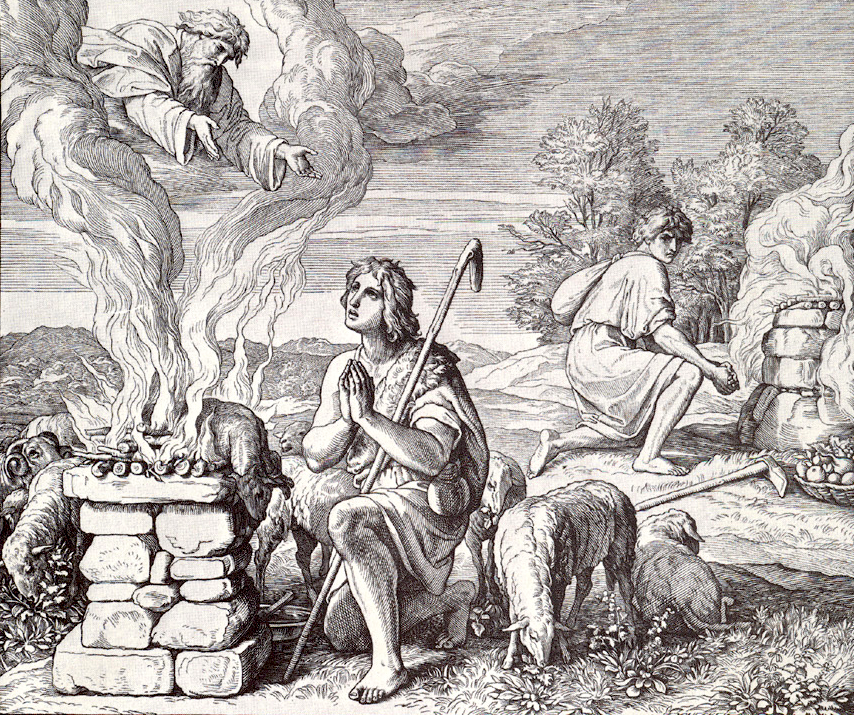
In the course of time Cain presented some of the land’s produce as an offering to the Lord. And Abel also presented an offering -some of the firstborn of his flock and their fat portions. The Lord had regard for Abel and his offering, but He did not have regard for Cain and his offering. Cain was furious, and he looked despondent. Then the Lord said to Cain, "Why are you furious? And why do you look despondent? If you do what is right, won’t you be accepted? But if you do not do what is right, sin is crouching at the door. Its desire is for you, but you must rule over it." Cain said to his brother Abel, "Let’s go out to the field." And while they were in the field, Cain attacked his brother Abel and killed him.
Genesis 4:3-8 (HCSB)

The first violent sin was the result of unresolved anger.  Perhaps that is why Jesus said:

You have heard that it was said to our ancestors, Do not murder, and whoever murders will be subject to judgment. But I tell you, everyone who is angry with his brother will be subject to judgment. And whoever says to his brother, "Fool!" will be subject to the Sanhedrin. But whoever says, "You moron!" will be subject to hellfire.
Matthew 5:21-22 (HCSB)

or why John said:

Everyone who hates his brother is a murderer, and you know that no murderer has eternal life residing in him.
1 John 3:15 (HCSB)

That unresolved anger can lead to violence whether verbal, emotional, psychological, or physical there can be no question.  That is why this is such an important issue to address. 

There are two way to interpret what God says to Cain.  Traditionally God gives us a admonition.  He warns that unresolved feelings of anger and feeling down give sin a foothold in your life.  I imagine a predatory animal just waiting to pounce.  It seems that sin is a opportunist taking advantage of our emotional state to do it's dirty work.  In this case the goal is to do what is right, rule over sin, or it will rule over you. 

The second way is looking that the interpretation from Hebrew to English more literally.  The word interpreted sin in this verse is "chatta-ah" in Hebrew.  This word can either be interpreted sin or sin offering.  If we go toward the latter then it would seem that God was giving Cain instruction on what to do with his sin.  Consider this translation:

And Jehovah saith unto Cain, "Why hast thou displeasure? and why hath thy countenance fallen? Is there not, if thou dost well, acceptance? and if thou dost not well, at the opening a sin-offering is crouching, and unto thee its desire, and thou rulest over it."
Genesis 4:6-7 (YLT)

In this case he says if you have done well then there is acceptance.  We know that God did not accept his sacrifice so then God goes on to say there is a sin offering at the opening (door) waiting for him to rule over it.  If this is the interpretation then I believe the whole interaction makes sense.  Cain offers a first fruits or grain offering offering to the Lord from the produce of the ground (See Lev 2:14).  Abel did this as well, however he (either in place of or in addition to) brings an animal sacrifice.  It is clear later in the Old Testament and then fulfilled in the New Testament that there is no remission of sin without a sin offering. 

For the bodies of those animals whose blood is brought into the most holy place by the high priest as a sin offering are burned outside the camp. Therefore Jesus also suffered outside the gate, so that He might sanctify the people by His own blood.
Hebrews 13:11-12 (HCSB)

So Abel's offering was not accepted because it was substantively better but rather it was a more complete (excellent) sacrifice offered in faith that God would remove sin (i.e., be approved as righteous before God; see Heb 11:4).  What is more if we follow this interpretation God provided Cain a second chance by putting a sin offering (at the door) which Cain subsequently rejected and went out and murdered his brother.  How often do we do the same when it comes to being angry.  We do not go out a literally kill someone, but we do reject the grace that God provides us and move into the greater consequences of greater sin brought about by passionate anger. 

Regardless of which interpretation you would follow there is action that is needed when it comes to dealing with anger.  Perhaps in this case we could take it to have double meaning (which does occasionally happen in the Bible) since they do not contradict each other.  First we must guard against sinful anger by doing what is right in the first place with a spirit of sacrifice (Rom 12:1-2).  Second, if we are angry we must be on guard to not sin (Eph 4:26).  If we do not guard ourselves then we will likely fall into sinful response in our anger.  Finally, if we do sin there is a provision of God's grace waiting at the door (Rev 3:19-20).  We must receive this provision of grace and allow Christ to overcome our anger at the moment it comes to us. 

Three principles:

  • Protective: Do what is right.
  • Awareness: Be on guard against sinful anger
  • Restorative: Repent of anger and trust in God's grace through Jesus

May God Richly Bless You

Thursday, July 22, 2010

Thankful for Friends that Make me Think and Help me with my Plank

I have got some feedback from friends that this sermon "The Time is Now" is a bit strong.  One has said that it is hypocritical for me to speak of such lofty things but not do what I say.  Another said that decent people hold the interpretation that the Bible says we are not to judge so I may be alienating them.  I am thankful for friends who are willing to ask me challenging questions and confront me if I have gone astray. 

That being said in this case I do not believe I am going beyond the text.  A nice person can say "BJ you are judging me," but the contradiction is that they are judging by making the statement.  There is a so called belief that judging is wrong and to be avoided.  However, if you apply that belief to anyone you contradict the value of non-judging.  The belief is self-contradictory.  In fact I would go so far to say that those that hold the banner of tolerance with the greatest of zeal are some of the most judgmental people I know! 

What is at stake is the very idea of truth.  If there is truth then we must use our God-given ability to discern to arrive at truth.  Along the way that will require us to make some judgments (more likely a lot of judgments).  Holding the belief that one can live life without judging is simply saying "there is no truth" in disguise (or at least that truth is not knowable).  I call this evil, not out of a spirit of self-righteousness, but rather a position that there is no truth or that truth is unknowable is completely out of step with what the Bible teaches.  It is evil because it contradicts the Bible.  A nice person can say something that contradicts the Bible, I can say something that contradicts the Bible.  Either way the statement is evil, even when the person making the statement is a nice person. 

I have to be on guard though.  Such powerful statements about judging can lead me to become prideful or have others perceive that I am being prideful.  I have to be careful of this.  Spiritual Pride is destructive as saying there is no truth.  I can be right technically, but wrong relationally. 

If I have the gift of prophecy and understand all mysteries and all knowledge, and if I have all faith so that I can move mountains but do not have love, I am nothing. 1 Corinthians 13:2 (HCSB)

That is why I am working on my planks.  I recently added this picture on my computer desktop.   I put it there to remind me to check my own planks.  The eye in the plank makes me think of having a plank in my eye.  I figure if I am going to challenge others to live out authentic lives and put away evil in their lives then I ought to be doing that myself else I be a hypocrite.   I want to live out the truth of:

Hypocrite! First take the log out of your eye, and then you will see clearly to take the speck out of your brother's eye.
Matthew 7:5 (HCSB)

Thank you to all of you who give me such wonderful feedback both on and off my blog.  I love each of you with the Love of Christ and hope that you would always feel that you can approach me with questions or concerns.  I also am open to the fact that even in this response I am off base.  If you believe that I am please let me know.  I will pray that God would help me get the plank out of my eye I that I may see clearly and help others.  What are your thoughts?

God Bless You All

Anger Defined

This is going to be my first post in a series on the subject of anger.  I have completed a word study based on the Hebrew and Greek words that are translated into the word anger or angry in English.  I came up with 15 different types of anger and 33 words (or word combinations) that translate to the English word anger.  That is quite a bit from the simple view I had of anger before I started this word study.  This post is a summary of the word study that I did in preparation for this series. 

Nose (Breathing Hard) Anger

There are times when angry we breath hard.  This picture is captured in the Hebrew by "nose anger."  Here are some examples of the anger of breathing hard.

Simeon and Levi avenging their sister's rape (by one man) by killing all the men in that community Gen 34 Gen 49:7
Moses toward Pharaoh when he would not listen Gen 11:8   
People of Nazareth toward Jesus when he said that a Prophet was without honor in his own hometown Luke 4:28
Idol makers (profiteers of false religion) when Paul and those accompanying him led people to Christ Acts 19:28  

Hot Anger

Very often people will explain to me that they feel hot when they are angry.  There is an expression that describes a person as a "hothead."  These are some examples of hot anger.

Esau toward Jacob when Jacob conned him out of his birthright and blessing Gen 27:44
Naham toward Elishia when he did not heal him in the manner that he expected. 2 Kings 5:12
Esther has several anger examples, The king toward his wife Esth 1:12,
Haman toward Mordecai Esth 3:5 and Esth 5:9,
The king toward Haman when he discovered his plot to kill Esther's kin Esth 7:7,
husband toward the man committing adultery with his wife Pr 6:34
Nebuchadnezzar toward Shadrach, Meshach, and Abednego for not worshiping his image Dan 3:13

Burning Anger

If there is heat then there must also be a source of heat which is often burning.  Below are examples of burning anger. 

Jacob with Laban when he did not honor his covenant but tricked him Gen 31:36
Jacob's sons when they found out that their sister was raped Gen 34:7
Abner toward Ishbosheth' accusation that he slept with Saul's concubine 2 Sam 3:8
David toward God when he struck down a priest 2 Sam 6:8
Jonah when God saved in Ninevahites Jonah 4:1

Exceedingly Angry

More burning anger, but in this case exceedingly so.

Cain when God did not accept his offering leading him to murder his brother Gen 4:5-6
Saul when people praised David greater than they praised him 1 Sam 18:8
David when he found out his son Amnon slept with his half-sister Tamar 2 Sam 13:21
Sanballat (and others) when Nehemiah was rebuilding the temple walls Neh 4
Nehemiah when he found out about social injustice among the Jews Neh 5:6

Smoking Anger

After heat and burning we have smoking anger.

Double Anger

Here we have a combination of burning anger with breathing anger something I call "double anger."

Jacob with Rachel when arguing about her not having children Gen 30:2
Potipher while listening to the false accusations against Joseph that he attempted to rape his wife. Gen 39:19
Moses toward the people of Israel when they worship false gods while he was on the mountain Exodus 32:19
Balaam the Prophet with his donkey hitting the donkey with a stick when he refused to move in the face of God's avenging angel Num 22:27
Balak with Balaam when the prophet did not curse Israel Num 24:10
Zebuel the governor of Shechem against Gaal inciting rebellion against king Abimelech Judges 9:30
Sampson when his wife betrayed him by sharing his secret with his enemies and he went out and killed 30 Philistines to take their clothing Judges 14:19
King Saul when the Amorites threatened the Israelite town of Jabesh 1 Sam 11:6
Eliab with David (his younger brother) when David came out to see the battle with Goliath 1 Sam 17:28
Saul toward his son Jonathan for siding with his friend David over him.  Jonathan with his father as a result 1 Sam 20:30, 34
David with himself before he realized Nathan was talking about his treachery 2 Sam 12:5
Elihu toward Job and his three friends Job 32:2-5 (consider the Lord's Response)

Provoked Anger (irksome, react against or rebel)

Provocation is the anger that is in reaction to someone else.  Someone has done something or the perception is that they have done something wrong against us so we are moved to anger. 

Peninnah toward Hanah (taunting her because she was childless Hanah toward Peninnah v 16) 1 Sam 1:4-16
King Asa toward Prophet Hanani when he told him the Lord was against Asa 2 Chron 16:10
Jeremiah toward the people of Israel over them going for idols Jer 8:19
The people of Israel toward God over showing Grace to foreign nations Deut 32:21 and Rom 10:19
Children toward fathers stirring them up Eph 6:4

Moses against the people of Israel ending up in his disobeying God (striking the rock rather than speaking to the rock) Numbers 20:10 and Ps 106:33
Israel against God Numerous examples of rebelling against God

Splintered, Cracked, or Chipped Anger

I picture a great tree being bent over in a storm to the point it begins to splinter and crack with this type of anger.  It seems that Moses experience this anger in leading the people of Israel.  Another phrase that comes to mind "he simply cracked." 

Nobles (men) at women for not obeying Esth 1:18
Pharaoh toward his servants when they offended him  Gen 40:2
Moses toward the people of Israel when they did not obey the Lord's instruction Ex 16:20
Moses toward Aaron's sons when they did not eat the sin offering (according to the Lord's instruction) on the day their bothers were stuck down by God Lev 10:16
Moses toward Israel when they did not follow his instruction to kill all the Moabites Num 31:14
Philistines against Achish for brining David with him to fight alongside them 1 Sam 29:4
Naaman when Elisha did not heal him in the manner he expected 2 Kings 5:11
Elisha toward Jehoash for only striking the arrows three times when more would have been greater victory (faith?) 2 Kings 13:19
King toward his wife Esth 1:12
Two Eunuchs toward the king when they planned to assassinate him Esth 2:21 
Jerusalem city officials when they mistakenly believed Jeremiah was deserting to the Chaldeans Jer 37:15

Outburst (quick/arrogant) Anger

At times the anger is quick and quite strong.  This outburst of anger leads to consequences down the road.

Jacob's sons when they found their sister was raped Gen 49:7
Country of Moab against Israel Isa 16:6 and Jer 48:30

Frothing at the Mouth Anger (indignation)

Rabid dogs come to mind with this type of anger.  But in reality this type of anger is more of indignation that rabid anger. 

Jeremiah toward revelers Jer 15:20

Desire/Passionate Anger

Our desires and passions are very strong.  At times these desires get the better of us.  However they don't have to even Jesus experienced this type of anger and yet did not sin. 

Jesus toward people in the synagogue because they desired to test Jesus over seeing a man healed Mark 3:5

Jealous Anger

Jealousy is a huge trigger for anger in some cases.

Philistines toward Isaac over his success as a shepherd Gen 26:14
Rachel toward her sister Leah because her sister was able to have children but she was not Gen 30:1
Joseph's brothers toward Joseph about his dreams Gen 37:11

Malicious Anger

When anger and ill will meet up it is a deadly mix.  You have the desire to harm combined with the motivation to do something about it.  This type of anger is to be avoided.  There were no examples of this word used, but I am sure we can think of some personal examples.

Grudge Anger

We can also hold on to anger and when we keep it (as is the case in this type of anger) then it will become bitterness in our souls.  We poison ourselves against others.  

Bitter (Poisonous) Anger

Bitterness and poisonous thoughts will keep anger going and growing

Simon Magnus when he sought the Lord's blessing with money Acts 8:23
Jews toward Jesus for healing on the Sabbath John 7:23


Well that is a summary and examples of the various types of anger as described in the Bible.  I think that we may over simply the feeling of anger.  It seems that anger is a rather complicated emotion.  I would even go so far as to say it is as complex as love.  Interestingly both are rooted passions.  Passions and desires bring out the very best and, unfortunately, the very worst in all of us.  There is hope when it comes to anger though.  Twice the Bible says "be angry, but do not sin (Psalm 4:4 and Eph 4:26)."  In my upcoming posts I will take a look at how one might accomplish this. 


God Bless You.